Showing posts with label Africa. Show all posts

Friday, May 14, 2010

My Final Blog

"Oh, I'm on my way, I know I am, somewhere not so far from here," begins Cat Stevens' "Sitting," one of my all-time favorite songs.


In some ways, the past months have gone fast, but there are times when I find it hard to remember the feeling of home. I guess that means it's time to head back and resume what a lot of people would call "real life."


But not before I say a few final words--and offer a few thanks, because Cat's song goes on to say "Sitting on my own--not by myself. Everybody's here with me." In truth, I've never felt alone on this trip. Writing this blog has been an enlightening experience. It's helped me focus on details, cement memories, and analyze my feelings--and feel close to the people I care about.

Sometimes, though, I admit it felt like I was writing to the air. Thank goodness for Courtney, Joanne, and Cornelia--my most consistent comment-ers. You three women tethered me to an audience, reminding me people were out there.

And Doug--who located me on Google Earth wherever I went--you were my best email pen pal. It made me feel secure to know someone knew exactly where I was on the planet--whether it was Otjewarango, Chiang Mai, or the Kinabatongan River.

Fred, my anchor--there aren't many men who would hold down the fort (and the dogs) while his crazy partner goes cavorting around the world. I can't thank you enough.


During the past 20 years or so, I've tried to live by a certain creed: that is, when I get to the end of my life, I want to be able to say "Remember when . . . " not "I wish I had . . . " This trip has gone a long way in furthering that belief, and although I probably won't leave this life with a truckload of money, I will go with a head full of amazing memories--including the new and old friends I've spent time with on trips like this.


What can you say about a friend like Amy, who travels to the far side of the world just to be "along for the ride"? You rock, Girl.


And Randall, my brother, who takes time out from Saving The World For Democracy to zip through the rainforest canopy--never once mocking my inability to stop screaming like a little girl.


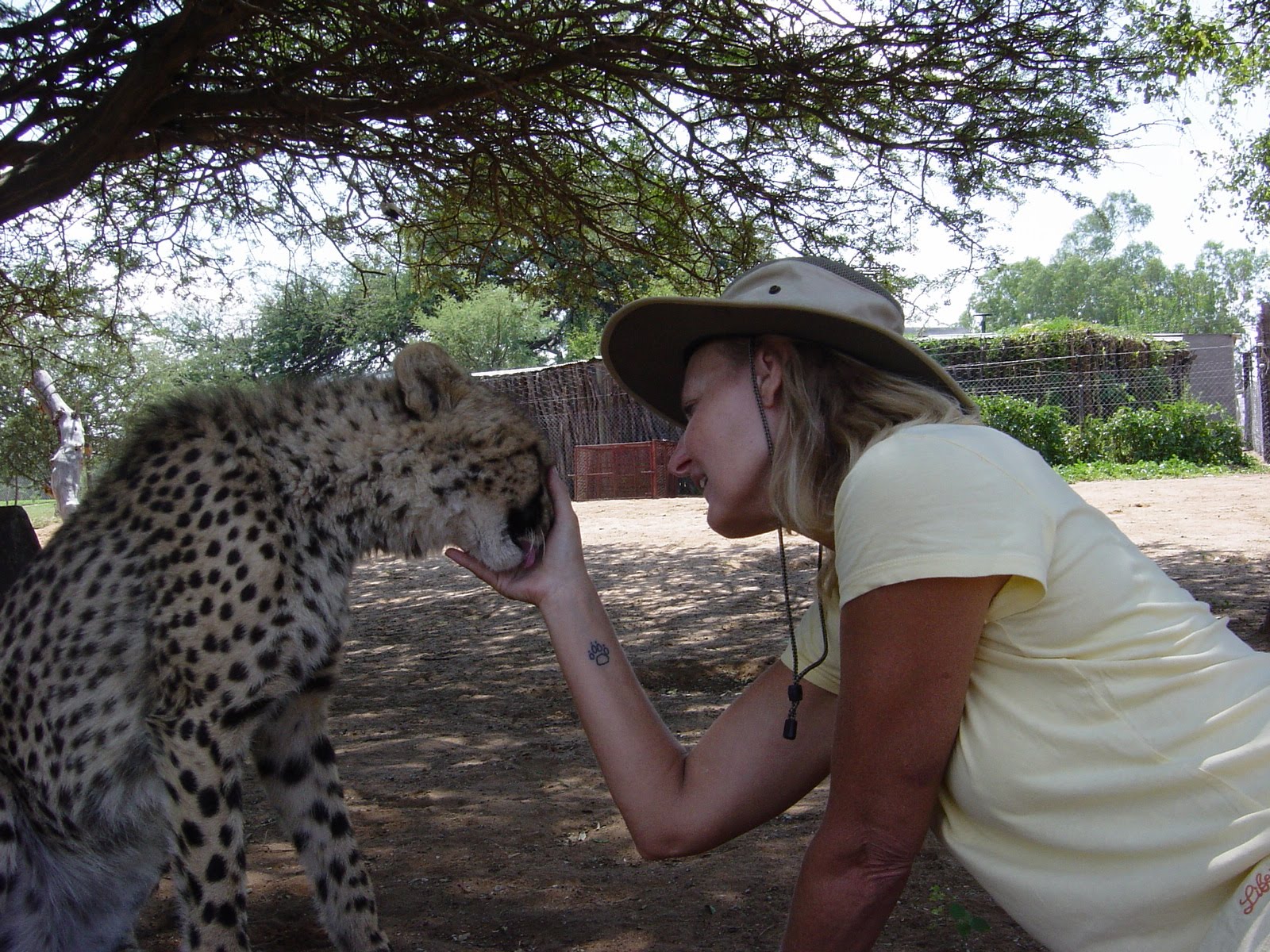
Traveling alone mostly, though, pushes me into interacting with people I wouldn't otherwise meet, and my life has been so enriched by both these fleeting and lasting encounters in airports, on beaches, on trails, or just sitting around petting a lion.

At the core of this whole adventure, though, are the animals. I've had experiences and encounters whose significances I can't adequately express. For me, the creatures of the world are my best friends, my therapy, and my hope. I wanted to have that faith reassured and renewed on this trip, and I've been rewarded more than I dared dream.


Finally, Cat's song reminds me that "Life is like a maze of doors, and they all open from the side you're on." It's up to each of us--no one else--to make life wonderful and interesting. So put your hand on the doorknob and turn . . . .


Sunday, March 21, 2010

Volunteering

By now some of you are wondering, "Hey, how can I get a piece of this action?" (The rest of you are muttering, "Hey, how crazy IS Barbara?")

Well, of course, you can always come to Harnas as a guest and stay in one of the bungalows. You'd get to take the feeding tours, see lots of wild animals, and even touch a few. But because of liability issues that always rear their ugly heads--even in Namibia--guests have limited contact with the wild animals. But for many people, that's okay. Petting a tame cheetah, playing with baby warthogs and jackals, maybe holding a baby baboon might be enough for you.

But if you want the real deal, getting dirty and involved, working harder than you've ever worked before and loving it--then you should consider becoming a volunteer.

Most of the volunteers are between 18-30, but Harnas also has special weeks set aside twice a year for "Mature" volunteers--the over-40 crowd. (Not to imply that the other volunteers are "immature.") They've also had sessions exclusively for couples who want to come together.

As a volunteer, you stay in a cabin with three other people, sleep on a cot, eat with the other volunteers, and work in groups to prepare food, feed animals, clean enclosures, take walks with animals, and do what is called "farm work"--which includes anything from picking up bones from the Wild Dog enclosures to raking weeds to putting up fences. You'll sweat and bleed and get great satisfaction for doing more physical work than you've probably done in a long time--if ever.

It's how I started at Harnas. I was definitely in the "mature" category, but back in 2007 there wasn't a special session for us Oldies. I just worked alongside the 20-somethings. Sure I had to go to bed earlier so that I could maintain my energy level, but it was worth every drop of sweat.

One of the things that a volunteer group did recently was empty, clean, and refill one of the big waterholes in a baboon enclosure. I watched these guys at work--and play (because, let's face it, it's hard not to stop work and play with baboons every once in a while--especially when they jump on you, swing from you, and generally drag you into their games).

They worked hard all day emptying the hole and scrubbing it out. The real fun began when they started filling it again. Baboons love water. They jump in it, swim in it, slide into it, drink from the hose, and act just like we all did when we were kids playing in the front yard sprinklers.

The sense of accomplishment the volunteers felt at the end of the day was palpable--something you don't feel after winning a video game, watching sports, or just hanging out, as so many people spend their time doing these days. This was old-fashioned work, and there was plenty of old-fashioned pride to go around when the deed was done. They all took pictures of their work. When was the last time that you felt so proud of something you had done that you wanted a picture to remember it? (Yeah, let's take a picture of that report for work. How about a photo of your tax forms all filled out?)

And the real sense of accomplishment came when they saw how the animals appreciate what they had done, such as the baboon in this clip enjoying a leisurely swim--and then a not-so leisurely run around the enclosure (where you can see all their "toys").

Volunteers can stay from 2 weeks to 3 months. But no matter how long they stay, they all say the same thing: Harnas changes them in good ways they never imagined.And with their good work, they help Harnas.

Tuesday, March 16, 2010

The Heart of Darkness--REAL Darkness


Forget about lions and leopards and snakes. Or even being chased by a lunatic giraffe (which she did again yesterday when Cornelia and I were out walking with 2 dogs. Schalk had to rescue us in his truck.)

One of the scariest experiences is going back to your bungalow on a dark night when you've forgotten your flashlight.

It happened to me once a couple of years ago when I was staying out in a far-away house. There was no moon. Do you know how dark it can be when the closest town in 1 1/2 away? You hear cliches like "can't see your hand in front of your face" or "black as pitch" but they're cliches for a reason: they're true.

I was returning from a night of merriment at Jo's house and headed across the grass, thinking it wasn't going to be difficult at all because I have a good sense of direction. Then everything seemed turned around and I was walking not on mown lawn but in high grass and tripping over stones. When I finally ran full into a large cross, I figured out I had wandered into the animal cemetery and was tripping over graves. I wandered for about 15 minutes before I was able to find the bridge leading to my house. I laugh now, but it's reaaaalllly scary not to know where you are when there could be any number of wild animals who know EXACTLY where you are.

A similar situation--but worse--happened to Willi the other night, who is seen above during one of his braver moments.

We were having a movie night at Jo's house (Julie and Julia with Meryl Streep) and after awhile Willi decided to go home, smoke a pipe, and relax rather than endure a chick flick that was in English (German is his first language). Like a good husband, he left his flashlight for his wife Cornelia. Then he left.

Almost two hours later I was in Marieta's house, feeding bottles to baboons, when Cornelia came rushing in. Willi wasn't at the house, wasn't with Schalk, wasn't with Frikkie. He was missing.

A search ensued with Schalk bringing out a spot light that could light up half of Africa. They searched and searched.

And there he was--knee-deep in the duck pond, confused, lost, and pretty mad at himself.

He had lost his way without any lights, wandered around for several hours. He hoped he wouldn't accidentally run into a snake, warthog, lion, leopard, giraffe, ostriche, or any number of creatures that would make his experience even worse. We were especially glad it was the duck pond and not the crocodile enclosure he fell into.

In the light of day, we all laughed and joked and looked at the beautiful surroundings that are Harnas and wondered how they could be scary. But at night, a different world emerges. If you want to know what it feels like, turn off all your lights, blindfold yourself, and then stand in a dark closet. Twirl around a few times. Try to identify which way is north.

Monday, March 1, 2010

Lala

I'm home from my trip to Swakopmund, but tales of that adventure will have to wait till tomorrow.

The first creature to greet me home was Lala, the beautiful and sweet yellow lab whom you can see in this photo with Pickles and the two baby boons in my bed one night. (When I got home, Pickles was in the kitchen with Cecelia, the cook, so it took her some time to hear me. Pickles is what I call a "meat-whore" and will love you for a bite of your supper.)

Once the two dogs and I had made re-connections and had a small lick-fest, the two joined me in my room while I unpacked. Soon, though, Frikkie called Lala out for an afternoon walk with Martha, the lion cub. She ran out my door--she loves taking walks in the bush.

A few hours later, I went into the office, and Mariska asked if I had heard anything about Lala, who, she said, had been bitten by a mamba on the lion walk. It was the first I had heard. I bolted for the clinic.

When I arrived, Lala was unconscious, with an IV drip in, and the vet was pumping air into her lungs every few seconds. The bite of a mamba paralyzes the lungs so the victim can't breathe. Her heart was beating rapidly (240 beats a minute) but the only thing keeping her alive was the slow pumping of air into her lungs. I tried to be strong, but Lala is such a good dog--only 6 six years old. She has raised a leopard cub and a lion cub as their surrogate mother, and has such a sweet temperament. We all took turns crying and petting and talking to her.

People were racing to Gobabis for the anti-venom, which arrived around 6 p.m. The vet put four doses into her and we waiting, taking turns pumping the air in. Her heart continued to beat at an alarming speed, and her temperature soared, so we packed her in ice until it came down. The snake had bitten her right on the tongue, so the poison went straight into her system. Her tongue was so big and swollen that it had to be pulled out of her mouth and set to the side. It looked like a piece of puffy liver.

As several of us sat around the table, talking and pumping, whispering to Lala and telling her to keep fighting, we talked about how this could have been prevented. The only way would have been to keep her from her favorite activity: running through the bush at high speeds, checking every plant and tree, and chasing whatever moved.

To protect her, she would have had to be on a leash the whole time, confined to a life that was careful but dull. Being bit by a snake is one of the risks dogs always have--not just in Africa, but everywhere. Back in North Carolina, my vet often has a dog in her office that has stuck its nose too close to a copperhead or cottonmouth. People often live in fear of what might happen, but dogs shouldn't have to. We can't make the choice for them--especially in a place where they can run free.

At 8:00, the volunteers started in shifts of 2 people for 2 hours each, pumping and watching her. Then the medicine started to work, and at midnight she started to breathe on her own, so the vet, Desmond, gratefully took the tube out. She started to regain consciousness--a slow process.

I didn't sleep much. This morning I ran over to the clinic first thing, found her still on an IV and lying down on her side, but conscious and breathing. When I said her name and petted her, she wagged her tail. Now it's just a matter of time--recovery is slow, but there should be no side effects.

It's wonderful that everyone came together to save the life of this one dog. People here will do anything because they believe that the lives of animals are valuable. All the time, energy, money for medicine, and belief of the people here made it happen.

This morning I whispered to her that she is welcome to sleep in my bed as soon as she is able.

Sunday, January 17, 2010

wild dogs

First an update on Jessie: we removed the bandage on the foot so it can get some air, but the one on the hand still needs to be wrapped so that she won't chew and suck on it. She doesn't seem to know she's wounded, though. She jumps around just like before--just can't hold on and climb as well with that big bandage on--it looks like a big, white mitten. Coco was hurt last night, though (more on that some other day), so Jessie slept with me and Pickles. One big animal family.

I want to tell you about an animal that a lot of people don't know about outside Africa--the African Wild Dog. They're amazing but very endangered because they're such successful hunters (in packs) that the farmers shoot them just for existing. Harnas has a Wild Dog Project that is trying to breed them and then release them in controlled areas. Right now, Harnas has about 1% of the Wild Dog population that exists.

They're about the size of a medium-sized dog and each one has a different "tye-dye" look to their coat--like a fingerprint they can be identified by this. They have big round ears like Mickey Mouse that help them communicate with each other while they hunt. And the SOUND. Nothing like you've ever heard. Not a bark, not a yelp--a kind of squeak. When we go out to feed them, they go nuts and all make noise at once. I'm going to include a video of their feeding frenzy because if you haven't heard it, you'd never believe it.

When they hunt, they take turns running after the animal, and one dog gets tired, others take over, taking nips and bites out of the prey until it's exhausted and falls. Then they share the kill--even taking meat home to old dogs and pups. They're matriarchal--go girls--and only the alpha female gets to have litters, but all of the females help take care of them. With them, it's all for one and one for all. They know their strength is in their numbers, not their power (like lions), their stealth (like leopards), or their speed (like cheetahs).

Here's the video:

Monday, January 11, 2010

king of Harnas

Yesterday I went out on the guest tour. We ride in a big "safari" style truck and visit the outer enclosures where the older animals live (most of whom were raised here from babies) while volunteers feed them their daily food. It's a great 3-hour experience coming face to face with leopards, lions, cheetahs, baboons, caracals, African wild dogs and so on--and the guide gives so much interesting and important information as you drive and watch. It's more of an educational experience rather than like visiting a zoo. Guests come away with a new understanding of the plight of many of these creatures.

I love going just to catch up on how everyone's doing. It's great fun to see old friends and new additions.

One of the most impressive sights is Sher Khan, the biggest and most fierce of the lions (although he'll soon be caught in size by Zion, one of the lions who was a cub when I came here three years ago). Sher Khan was once a small, cuddly cub, but he's 8 or 9 now, and as male lions become mature, they grow more aggressive and can't be approached anymore by people--even the ones who raised him. (The females often stay relatively tame.)

I'm going to include a video of Sher Khan's behavior as we stopped and approached his fence. You'll see him kicking up dirt--that' s sign of aggression and marking his territory. You'll also see that the fence between me and him looks small and fragile, but be aware that there are electric currents running through it that deter him from rushing the fence.

It's quite a sight. Enjoy it!